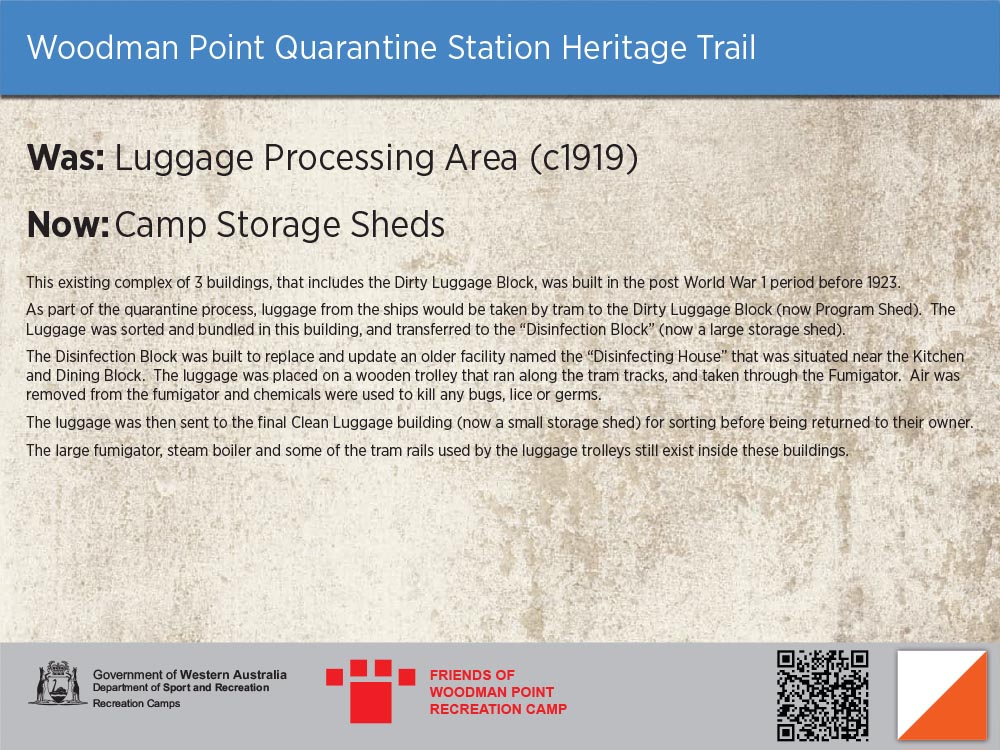
Luggage Processing Area
In the 1800s to 1900s, some ships could carry up to 500 people. That’s a lot of people that could arrive at the quarantine station without much notice. Station officers needed to have everything prepared at all times, and when a ship did arrive, they had a lot of work to do to make sure all their clothing and luggage was free from germs and bugs!
Tramway
In 1903, a narrow-gauge tram rail was constructed that went the complete length of the jetty, and then all the way from the jetty to the Plague Hospital. After World War 2, the tram rail only went to the Dirty Luggage Block, located next to the Fumigation Block. The tramlines are still in place inside the fumigation shed.
Luggage sorting
Luggage from the ships were brought to the dirty luggage shed, now called the Program Shed, here they were organised onto trolleys for fumigation. After fumigation they were moved into the clean luggage shed, now the camp workshop, to be sorted before being returned to their owners.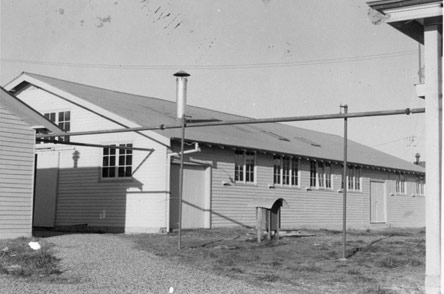
Fumigation
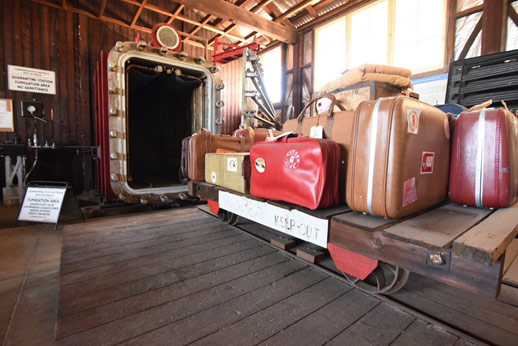
The fumigation processed involved closing both doors and creating a vacuum to seal the doors. Each door weighs one tonne and took approximately 150 full turns of a heavy wheel for each door to be fully closed. The objects to be fumigated were exposed to 10 pounds pressure atmosphere, then they were either steamed (for smallpox), or subjected to a mixture of sodium cyanide (for bugs), methyl bromide (for poppy seeds) or formalin (for foot and mouth disease). The vacuum was then released, and the steam or gasses were vented through a pipe system at the back of the building.
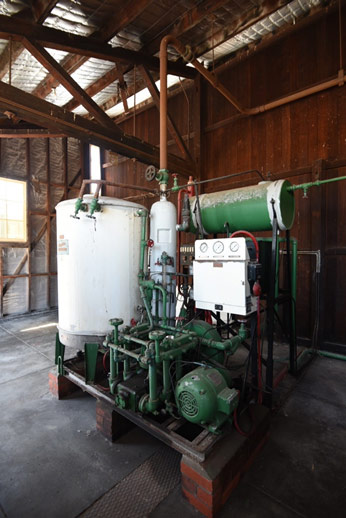
Steam generator for power and hot water
Hot water for the shower block and laundry, and steam for fumigation, were both made by the steam generator. Originally powered by diesel fuel, there was a large underground fuel tank and a high chimney column that could be seen a long way off shore as a navigation landmark. Later, it was converted to run off electricity.
The steam generator is still located inside the fumigation shed.
More information
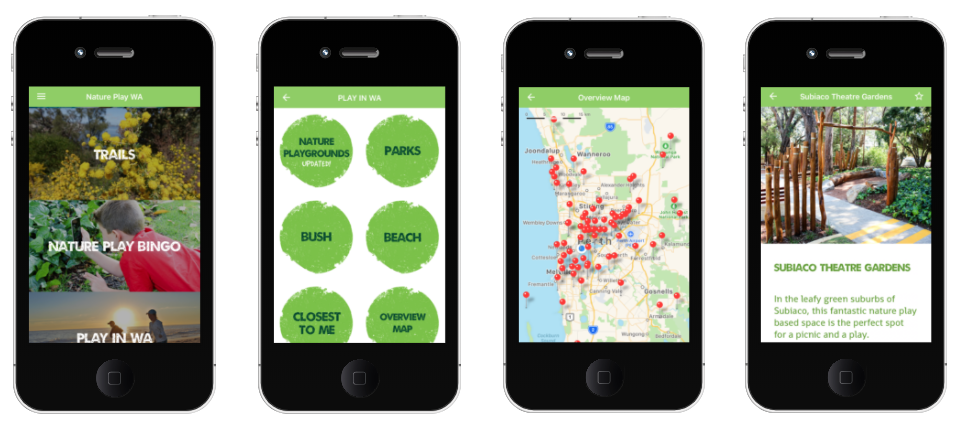
- Follow and interact with the Heritage Trail on the NaturePlayWA App.
- Heritage content compiled by Woodman Point Recreation Camp, in collaboration with the Friends of Woodman Point Recreation Camp Inc.
- Images sourced from archival and personal collections held by the Friends of Woodman Point Recreation Camp.
- ‘Western Sentinel: A history of the Woodman Point Quarantine Station, Western Australia 1852-1979’ by Ian Darroch, is available for purchase from Woodman Point Recreation Camp. Proceeds to the Friends of Woodman Point Recreation Camp to conserve and promote the heritage of the Quarantine Station.